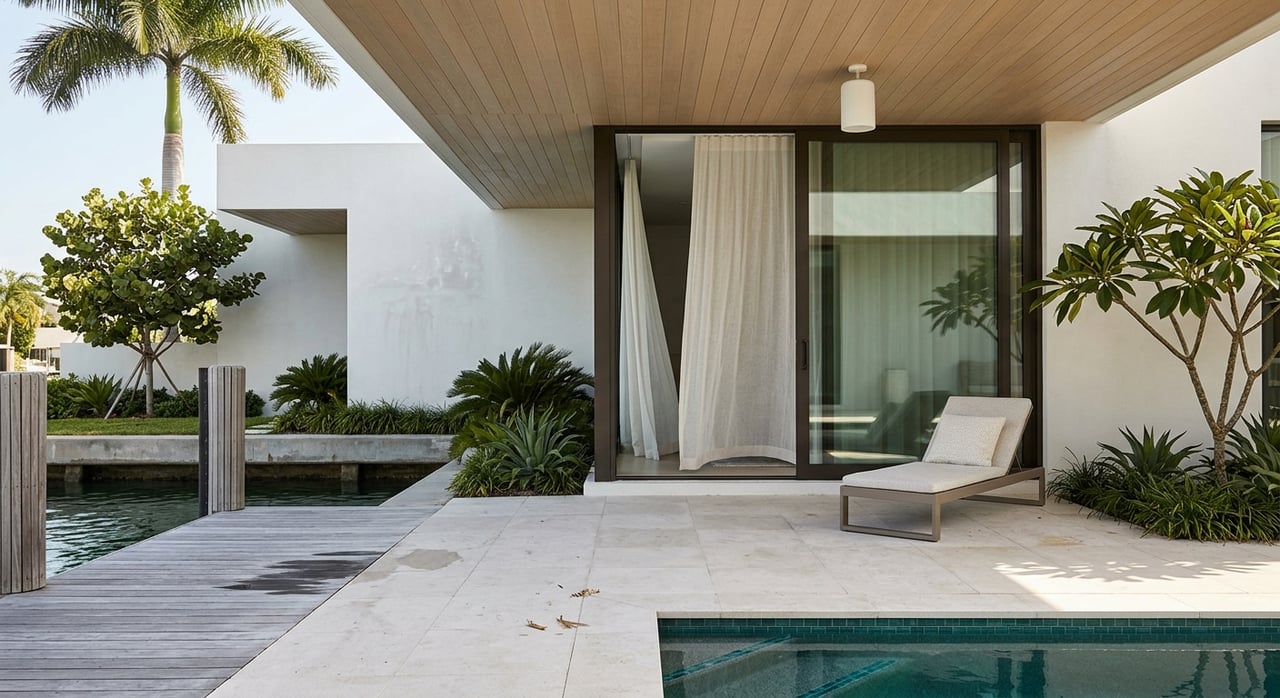
If you have ever driven Fort Lauderdale’s waterfront streets and wondered why some homes feel timeless while others feel crisp, modern, and built around the view, the answer is often architectural style. On the water, design is not just about looks. It shapes how you experience light, breezes, dock access, privacy, and everyday indoor-outdoor living. If you are buying, selling, or simply trying to understand what gives a waterfront home its character, this guide will help you see the major styles that define Fort Lauderdale’s shoreline. Let’s dive in.
Why architecture matters on Fort Lauderdale’s waterfront
Fort Lauderdale is surrounded by water and includes 165 miles of scenic inland waterways, which gives waterfront architecture a very specific role in daily life. Homes here are often judged by more than curb appeal alone. Buyers also pay close attention to how a property frames the canal, Intracoastal, or river view and how easily the home connects to outdoor living and boating.
That is why the city’s architectural story feels layered rather than one-note. Areas like Rio Vista and Central Beach reflect different moments in Fort Lauderdale’s growth, with styles that range from early Mediterranean Revival to postwar Ranch and Mid-Century Modern to newer Contemporary infill. The common thread is simple: the best waterfront homes respond to sun, water, and lifestyle in a thoughtful way.
Mediterranean Revival feels classic Fort Lauderdale
If you want the style that feels most tied to Fort Lauderdale’s early waterfront identity, Mediterranean Revival stands out. The city connects this style to the 1920s Florida land boom and notes that in Rio Vista, developers intentionally used it to create a subtropical waterfront image.
Mediterranean Revival combines Spanish Revival and Italian Renaissance Revival influences. Typical elements include one- and two-story forms, interior courtyards, arcades, loggias, flat roofs, terracotta barrel tile, columns, decorative tile, and ironwork. On the water, these details can create a home that feels both elegant and rooted in South Florida’s historic character.
For sellers, this style often carries strong visual identity. For buyers, it can offer a sense of permanence and romance that newer homes may not try to replicate. In neighborhoods with older waterfront housing stock, this is often the style that signals classic Fort Lauderdale.
Why it works on the water
Mediterranean Revival suits a subtropical setting because it naturally supports shaded outdoor spaces. Courtyards, loggias, and arcades can soften the transition between indoors and outdoors while helping manage sun and rain.
That matters on waterfront lots where the backyard, terrace, and dock area are part of the experience. Even when a Mediterranean home has been updated over time, its original language often still centers on outdoor living, architectural detail, and a strong sense of place.
Mid-Century Modern maximizes light and views
If your priority is natural light and long water views, Mid-Century Modern is one of the most compelling styles to watch for. The city defines it as a postwar style from roughly 1945 to 1970, known for geometric forms, large expanses of glass, open floor plans, flat planes, and clean lines.
Those features make obvious sense on waterfront property. Large windows and open living areas help pull the canal or Intracoastal into the daily experience of the home. Instead of treating the backyard as separate from the house, Mid-Century Modern often makes the view a central design feature.
The style is also part of the local fabric, not just an imported design trend. In the Rio Vista and Riverside Park survey area, the city identified seven Mid-Century Modern buildings, showing that this look has a real place in Fort Lauderdale’s architectural evolution.
What buyers often like most
Mid-Century Modern homes tend to feel open, airy, and visually calm. Their clean lines can make even modest-scale homes feel more expansive, especially when the layout is oriented toward the water.
For many buyers, this style offers a strong balance of design interest and livability. It can feel distinctive without being overly formal, and its emphasis on daylight remains highly appealing in a waterfront setting.
Ranch homes offer flexible waterfront living
Not every defining waterfront home in Fort Lauderdale is grand or highly ornamental. Ranch, Transitional Ranch, Styled Ranch, and Minimal Traditional homes are also part of the city’s postwar architectural story, and they often appeal to buyers who want simplicity and flexibility.
The city’s surveys note that postwar domestic architecture in Florida saw a proliferation of Ranch Style and Minimal Traditional homes that emphasized the connection between interior and exterior spaces. Styled Ranch homes added historical detailing, and the Rio Vista and Riverside Park survey recorded 14 Styled Ranch homes.
That may not sound glamorous at first glance, but these homes can be very practical on the water. Their layouts are often easier to personalize, modernize, and adapt because they are not fighting a highly formal floor plan.
Why Ranch styles still matter
Ranch homes often treat the backyard as part of the living area. On waterfront parcels, that usually means the main living spaces and entertaining zones naturally orient toward the pool, patio, dock, or water view.
For buyers who value a more relaxed coastal lifestyle, this can be a major advantage. For sellers, a well-updated Ranch or Styled Ranch home can present as easy, livable, and aligned with how many people want to use a South Florida waterfront property today.
Contemporary homes reflect today’s waterfront priorities
Many newer waterfront homes in Fort Lauderdale use a Contemporary or South Florida Tropical Modern design language. These homes often lean into expanses of glass, open plans, and strong indoor-outdoor flow while adapting to the realities of heat, glare, and heavy rain.
The city’s definition of Contemporary architecture emphasizes overhanging eaves, roof beams, recessed entries, and windows placed for views and light rather than symmetry. South Florida Tropical Modern adds a more local expression, often using breezeblock, curvilinear volumes, deep eaves, and generous glazing.
This style has become especially relevant in newer infill and redevelopment contexts. It speaks directly to what many waterfront buyers want now: bright interiors, clean lines, entertaining space, and a constant connection to the water.
Key design advantages
Contemporary and Tropical Modern homes often use deep eaves and overhangs to help mediate sun, glare, and rain. That is not just a visual choice. It also supports comfort while keeping views open.
These homes also tend to prioritize long sightlines. From the front door to the great room to the rear terrace, the architecture is often organized to make the water visible and central.
The features that matter across styles
No matter which architectural style you prefer, several design features consistently matter on Fort Lauderdale’s waterfront.
Light and view corridors
Mid-Century Modern and Contemporary homes are especially strong here because they use glass, open plans, and view-driven window placement. On a waterfront lot, that can make the canal, New River, or Intracoastal feel like an extension of the living space.
Indoor-outdoor flow
Ranch and Tropical Modern forms often excel at this. When living areas open directly to terraces, pools, and docks, the home tends to feel more connected to the waterfront lifestyle buyers are seeking.
Shading and roof form
Deep eaves, low-slung roofs, and overhangs are important in South Florida. They help manage sun and rain while still preserving openness and visibility.
Dock integration
Because Fort Lauderdale’s waterfront life includes marinas, docking, launches, and active use of the Intracoastal and New River systems, the rear lot matters as much as the front elevation. A home’s relationship to its dock, backyard, and boat access can strongly shape how the property lives day to day.
Materials and durability
Across the city’s surveys, common materials include stucco, wood, brick, breezeblock, barrel tile, and built-up flat roofs. These details tell you a lot about a home’s era and design intent, but they also matter when evaluating upkeep, renovations, and long-term presentation.
Where style variety shows up most clearly
Two areas stand out when you want to understand how layered Fort Lauderdale’s waterfront architecture can be: Rio Vista and Central Beach. The city describes Rio Vista as one of Fort Lauderdale’s oldest neighborhoods and ties it to early planned Mediterranean Revival development in a subtropical setting.
Central Beach tells a different story. The city’s survey identifies four areas where potential historic districts could form, including Birch Estates, Sunrise Lane, Harbor Drive, and Lauder-Del-Mar. That is a reminder that even within one waterfront zone, you may see several distinct architectural chapters rather than one uniform look.
For buyers, that means style preferences should be matched to specific streets and blocks, not just broad neighborhood names. For sellers, it reinforces how important it is to position a property within its architectural and locational context.
What style means for resale and renovation
Architecture influences more than first impressions. It can also shape renovation choices, buyer expectations, and resale strategy.
In some older waterfront-adjacent areas, preservation considerations may come into play. Fort Lauderdale has three locally designated historic districts, and the city’s Historic Preservation Design Guidelines include a Certificate of Appropriateness process for work affecting historic properties. In places like Rio Vista and Central Beach, where historic resources have been documented, that context can matter when planning updates.
Waterfront buyers and sellers also need to think beyond style alone. The city notes that many residents live in or near Special Flood Hazard Areas, that flooding is not covered by most homeowners insurance policies, and that Fort Lauderdale participates in the National Flood Insurance Program’s Community Rating System. In established isles, utility undergrounding projects have also improved reliability and restored streets with new lighting and resurfacing.
In practical terms, the strongest waterfront value stories tend to combine architecture, view, dockage, and resilience. A beautiful home may attract attention first, but buyers are usually weighing the full package.
How to identify the right fit
If you are trying to decide which style fits your goals, start with how you want the home to live.
- If you want a classic Fort Lauderdale look with historic character, Mediterranean Revival may feel most aligned.
- If you want light, glass, and strong water views, Mid-Century Modern or Contemporary may stand out.
- If you want a simpler layout with room to personalize, Ranch and Styled Ranch homes can be appealing.
- If you want a newer, design-forward waterfront experience, Tropical Modern may offer the clearest match.
For sellers, style also affects presentation. A marketing strategy for a Mediterranean Revival estate should not feel the same as one for a glass-forward Contemporary home. The strongest results usually come from highlighting the architectural story that makes the property memorable in the first place.
Fort Lauderdale waterfront homes are not defined by one signature look. They are defined by how each era of architecture responds to the same essentials: water access, sunlight, breeze, outdoor living, and the desire to make the view part of everyday life. If you are buying, selling, or exploring off-market waterfront opportunities, working with a team that understands both style and positioning can make all the difference. Connect with Megan Romine to schedule a private consultation.
FAQs
Which architectural style feels most classic in Fort Lauderdale waterfront homes?
- Mediterranean Revival is the style most closely tied to Fort Lauderdale’s early waterfront identity, especially in Rio Vista during the 1920s land boom.
Which Fort Lauderdale waterfront home style best maximizes light and views?
- Mid-Century Modern and Contemporary homes are often best for light and water views because they use large expanses of glass, open plans, and window placement designed around views.
Which Fort Lauderdale waterfront home style is easiest to personalize?
- Ranch and Styled Ranch homes are often easier to personalize because their layouts are typically simpler and more adaptable.
Where can you see the most architectural variety in Fort Lauderdale waterfront areas?
- Rio Vista and Central Beach show especially clear style variety, with layered historic context and multiple architectural periods represented.
Do historic rules affect renovations for some Fort Lauderdale waterfront homes?
- Yes. In some areas with documented historic resources or local historic district context, Fort Lauderdale’s preservation guidelines and Certificate of Appropriateness process may affect certain exterior changes.
What features matter most besides style in a Fort Lauderdale waterfront home?
- Buyers often focus on light, view corridors, indoor-outdoor flow, shading, dock integration, and material durability, along with practical considerations like flood risk and infrastructure.