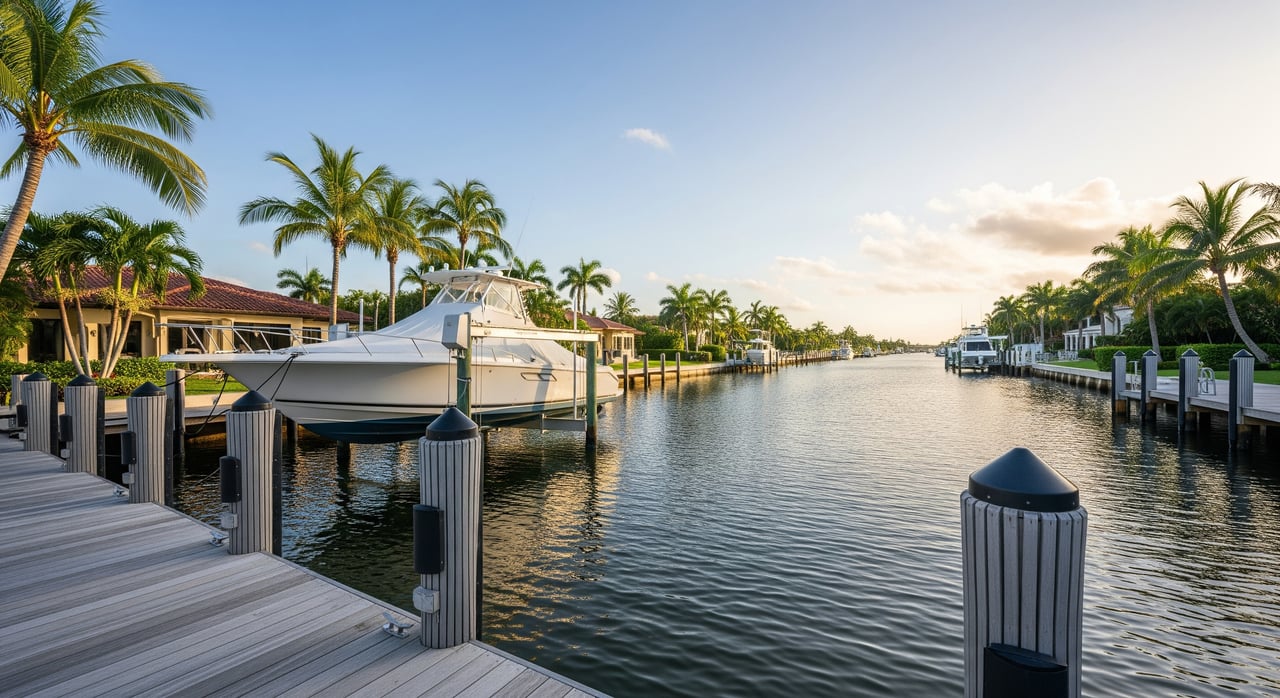
Thinking about a waterfront home in Lighthouse Point and picturing your boat right outside? The right dock can make daily boating easy, safe, and enjoyable. The wrong setup can add cost, delays, and limits on the size of vessel you can use. In this guide, you’ll learn the key dockage options, what permits and site factors to verify, and how to protect your investment before you buy. Let’s dive in.
Dockage types in Lighthouse Point
Private fixed dock
A fixed dock is a permanent structure attached to pilings, usually extending from your seawall. It is common for single-family homes with deeded water frontage in Lighthouse Point. Many owners add boat lifts, cleats, lighting, and power, all of which require proper permitting.
Pros:
- Direct access and convenience.
- Customizable for your vessel.
- Adds lifestyle value for frequent boaters.
Considerations:
- Requires permits and inspections.
- Design must fit canal width, depth, and neighbors’ access.
- Maintenance and potential storm repairs.
Floating dock
A floating dock rises and falls with the tide. It can reduce concerns about changing water levels and is sometimes easier to modify over time. You still need permits, and placement must avoid environmental impacts.
Pros:
- Tidal adaptability and easy boarding.
- Can be modular and adjustable.
Considerations:
- Not ideal in areas with heavy wave action.
- Requires proper anchoring and compliance.
Boat lift or hoist
Many owners add electric or manual lifts to keep hulls dry and clean. Lift size and placement depend on water depth, dock design, and structural capacity. Electrical work must meet code for wet locations.
Pros:
- Reduces fouling and maintenance.
- Helps during storm prep.
Considerations:
- Structural and electrical permits required.
- Must match vessel weight and beam.
Community docks and association slips
Some communities or condos offer shared docks. Rules may cover boat length, guest use, waitlists, and maintenance fees. Always review recorded documents for rights and restrictions.
Pros:
- On-water access without full private maintenance.
- Often managed by the association.
Considerations:
- Limited control over availability.
- Rules may restrict boat size or use.
Marina wet slips and dry storage
If a property lacks deeded dockage, local marinas and dry stack facilities in the region can be a strong alternative. You gain professional services like fueling and haul-outs without the responsibility of on-site dock upkeep.
Pros:
- Professional operations and amenities.
- No construction or permitting on your property.
Considerations:
- Monthly fees and potential waitlists.
- Travel time from home to your boat.
Permits and approvals to expect
Building or modifying docks in Lighthouse Point is not a one-step process. Multiple agencies often review plans, especially for work over navigable waters or near sensitive habitats. Before you buy, confirm that any existing dock, lift, or seawall has proper approvals and that final inspections were closed.
City of Lighthouse Point
Local building, planning, and code teams handle most dock, seawall, lift, structural, and electrical permits. Expect local setbacks and placement rules. Unpermitted work can create liabilities and may require retrofits or removal.
Broward County
Projects that affect county canals, drainage, or coastal resources can trigger county review. Environmental protections and engineering standards often apply.
Florida Department of Environmental Protection and state submerged lands
If your dock extends over sovereign submerged lands or affects coastal resources, the state may require authorization or leases and environmental resource permits. Seagrass, mangrove, and habitat rules guide what can be built and where.
U.S. Army Corps of Engineers
Work in navigable waters and any dredge or fill activity may fall under federal review. State and federal agencies typically coordinate.
FEMA, floodplain, and insurance
Flood zone designations and base flood elevations influence design choices and lender or insurer requirements. Ask for the elevation certificate and understand how flood and wind insurance affect long-term costs.
Wildlife and environmental protections
Local waters include manatee protection zones and seagrass areas. These rules may limit dredging, piling placement, and prop wash near sensitive habitats. Mitigation can be required in some cases.
Waterway and site factors that matter
Water depth and draft
Depth can vary from block to block. Measure at mean low tide to understand the usable draft and whether your vessel will clear. If depth is marginal, dredging may be needed and will require permits and disposal plans.
Canal width and navigation
Narrow canals limit turning room and vessel length. Check the route to the Intracoastal Waterway and to the ocean. Consider distance and time to the Hillsboro Inlet, along with any fixed bridge clearances or bridge schedules on your route.
Tides and lift range
Even modest tidal swings affect boarding height and usable depth. If using a fixed dock or lift, confirm the system accommodates tidal extremes.
Seawall condition
Your seawall supports the dock and your land. Look for leaning, settlement, cracking, corroded tiebacks, and scouring at the base. Seawall replacement or major repair can be costly and will need permits.
Dredging feasibility
If the canal is shallow, dredging might expand access, but it is heavily regulated. Expect environmental review and testing of dredged material.
Utilities and electrical safety
Dock power must meet code for wet locations and include proper grounding and GFCI protection. Lighting and lift motors may need separate approvals.
Sea-level rise and storms
Southeast Florida is planning for higher water and stronger storms. Consider corrosion-resistant materials, resilient designs, and higher sill elevations. Floating systems can help adapt to future conditions.
Environmental habitat
Seagrass, mangroves, and fish habitat shape what you can build. Early habitat screening helps avoid design changes late in the process.
Buyer checklist before you write an offer
Use this list to avoid surprises and protect your plans:
- Verify ownership and water rights. Confirm deeded riparian rights and any dock easements. If the dock is shared, review the agreement.
- Gather permits and closeouts. Request approved plans and final sign-offs for docks, lifts, seawalls, and any dredging. Check for violations or open permits.
- Order a marine inspection. Ask a licensed dock or marine-structural contractor to inspect pilings, decking, fasteners, lift capacity, and electrical systems.
- Inspect the seawall. Hire a qualified seawall engineer or contractor to evaluate stability and recent repairs.
- Commission a depth survey. Measure depth at mean low water, check bottom type, and look for shoaling.
- Review flood risk and insurance. Get the elevation certificate, FEMA flood zone, and insurance estimates for flood and wind.
- Read HOA rules. For association docks, confirm boat length limits, guest use, and maintenance shares.
- Screen environmental constraints. Identify seagrass, mangroves, and manatee zones that may affect operations or future permits.
- Map your route. Note distance to the ICW and Hillsboro Inlet, fixed bridge clearances, and any bridge openings that could affect schedules.
- Confirm future permitability. If you plan upgrades, speak with the city and a marine contractor about setbacks, maximum lengths, and timelines.
Costs and timelines, in context
Exact numbers vary by site and market conditions, but you should plan for both permit time and scope. Small repairs or electrical upgrades can take weeks, depending on processing. New docks, lifts, or seawall replacements often take several months, especially if state or federal reviews are needed.
What drives cost:
- Length, materials, and number of pilings.
- Lift capacity, electrical scope, and lighting.
- Seawall type and condition.
- Dredging volume and disposal needs.
- Permit and mitigation fees, plus engineering reports.
Common delays:
- Protected seagrass or mangroves.
- Narrow canals or navigation conflicts.
- Impacts to neighbors’ access or view corridors.
- Unresolved past violations.
If on-site dockage is not ideal
Some buyers prefer the ease of a marina slip or dry stack, especially while planning future improvements at home. Others choose a community dock for near-term access. Compare monthly fees, availability, service levels, and your boating patterns. A marina can be perfect for larger yachts or when you travel often and want professional oversight.
Plan your dockage strategy
A simple framework can save time and money:
- Define your vessel and use. Note length, beam, draft, and how often you plan to use it.
- Assess the property’s baseline. Review permits, seawall, depth, and route to open water.
- Pre-clear feasibility. Consult with the city and a marine contractor on likely approvals and timelines.
- Align design with resilience. Consider floating options, corrosion-resistant materials, and future sea-level conditions.
- Build your budget and timeline. Include permits, inspections, and contingencies for seasonal weather.
Buying in Lighthouse Point can deliver a best-of-both-worlds lifestyle, with quick access to Broward County waterways and the Intracoastal. The key is confirming that the property’s dockage aligns with your boat, your routine, and long-term plans.
If you want a second set of eyes on a specific property or need referrals to marine specialists, reach out to the team that lives and breathes South Florida waterfront. Contact Megan Romine for concierge guidance and a private consultation.
FAQs
Can I build or replace a dock at a specific Lighthouse Point home?
- Start by confirming riparian rights in the deed, gathering existing permits, and consulting the City of Lighthouse Point and a licensed marine contractor about site constraints and approvals.
Are dock rights automatically included when I buy a waterfront home?
- Not always; dock rights can be separate or controlled by an association, so review deed language and any recorded easements or HOA documents.
What boat size can a typical Lighthouse Point canal support?
- It depends on canal depth and width, turning room, and dock design, so get a depth survey at mean low tide and consult a dock professional before assuming fit.
Will my homeowner’s insurance cover dock damage from storms?
- Coverage for docks is often separate or limited, and flood insurance may be needed, so review policy limits, exclusions, and riders with your insurer.
How does sea-level rise affect long-term dock planning?
- Rising water and stronger storms can change usability over time; floating docks, higher sill elevations, and resilient materials can improve adaptability.
What environmental rules could affect dock construction or dredging?
- Protections for manatees, seagrass, and mangroves can limit piling placement and dredging, and permits may require mitigation depending on site conditions.