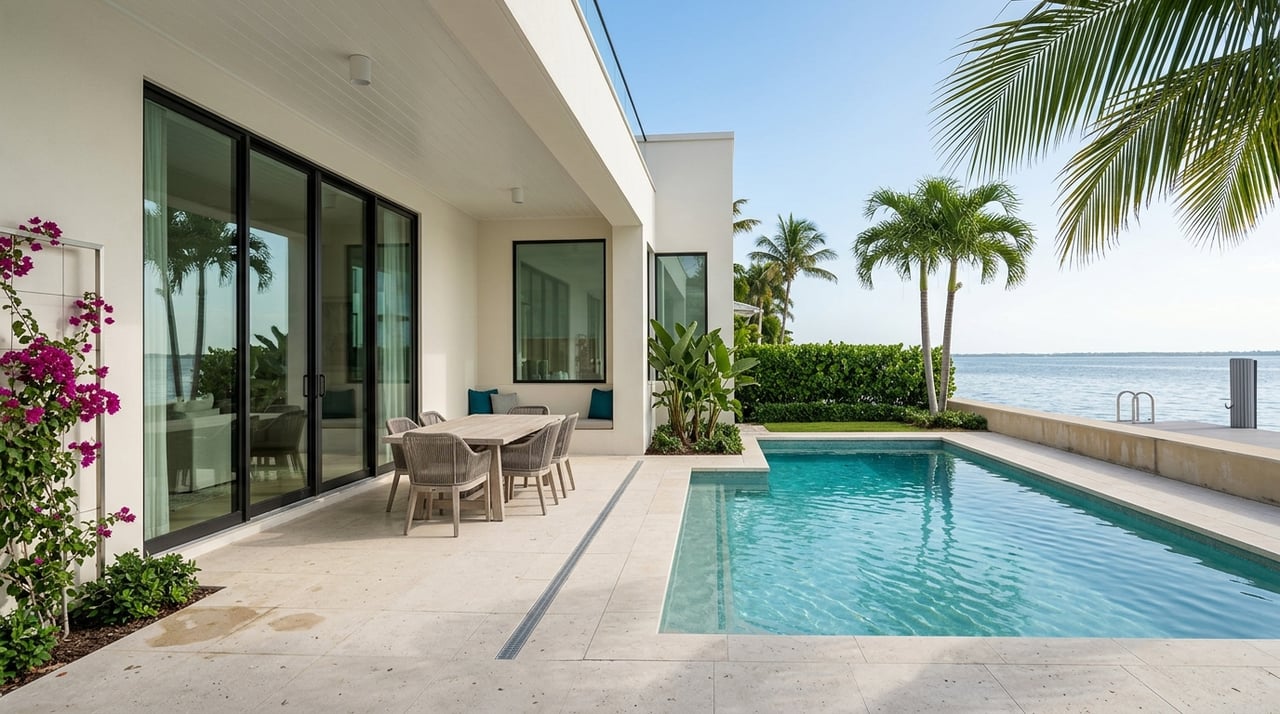
If you have looked at Delray Beach waterfront homes lately, you have probably noticed one thing fast: two properties that seem similar on paper can have very different price tags. That can feel confusing whether you are buying a coastal home, weighing a sale, or trying to understand what your property is really worth today. The good news is that waterfront pricing is not random, and once you know what drives value in Delray Beach, the numbers start to make much more sense. Let’s dive in.
Delray Beach waterfront pricing is segmented
A common mistake is to treat all Delray Beach waterfront homes as if they belong in one price bucket. They do not. Recent Redfin data showed a citywide median sale price of $520,000 in March 2026, while Delray Beach waterfront listings showed a median listing price near $565,000.
That difference is useful as a quick reference point, but it does not tell the full story. In this market, the most accurate pricing lens is usually a narrow one based on water type, frontage, neighborhood, and condition, not a broad citywide average.
Palm Beach County’s Property Appraiser also makes an important distinction here. Market value reflects what a willing buyer would pay a willing seller after proper exposure to the market, while assessed and taxable values are something different. In other words, your tax bill may offer context, but it is not a reliable shortcut for today’s waterfront pricing.
What drives waterfront value today
Water type matters first
Not all waterfront is valued the same way. In Delray Beach, oceanfront, Intracoastal-front, marina-adjacent, canal-front, and inland waterfront homes often attract different buyers and different comparable sales.
That is why the first pricing question is usually not “How big is the home?” It is “What kind of water does it sit on, and what kind of access or view does that create?” A property with direct ocean frontage should usually be evaluated against other oceanfront homes, while an inland waterfront home near Lake Ida or another low-lying area belongs in a different comparison set.
Frontage and view can change the number quickly
Waterfront buyers do not just pay for an address. They pay for the experience of the site, including the water view, the feel of the lot, and the amount of actual water frontage.
In practical terms, that means two neighboring homes can price differently if one has a broader view corridor, more linear feet on the water, or a more direct orientation to the water. Even when square footage is similar, frontage length and view quality can push value up or down.
Condition and renovation level still matter
A prime location does not erase condition issues. Appraisal guidance distinguishes between homes that are not updated, updated, and fully remodeled, and those categories can produce very different pricing outcomes.
For sellers, this is especially important. A home with dated finishes may not compete in the same tier as a nearby property with a high-end renovation, even if both sit on the water. For buyers, it helps explain why a home with a lower asking price may still require additional investment after closing.
Lot use and legal limits affect value too
Florida’s valuation framework looks beyond the structure itself. Location, size, condition, highest and best use, and legal constraints all matter.
In Delray Beach, overlay rules, design review, and historic district approvals can shape what a future owner can actually do with a property. If a buyer sees limited renovation or redevelopment flexibility, that can affect what they are willing to pay today.
Delray Beach micro-markets price differently
Oceanfront and barrier-island homes
The city’s beach-area guidance treats these properties as a distinct environment. Ocean District lots typically have direct frontage, larger lot patterns, and strong orientation toward ocean views.
That matters because buyers in this segment are often evaluating much more than interior finishes. Privacy, site layout, landscape design, and the direct relationship to Ocean Boulevard can all influence pricing in ways that make these homes different from canal or inland waterfront options.
North Beach and Seagate homes
North Beach and Seagate often present a different waterfront profile. According to the city’s design framework, lots here are typically smaller, and many are oriented to the Intracoastal Waterway rather than the ocean.
These areas also include lower ground elevations and some grade changes. As a result, pricing often reflects a mix of factors such as view corridor, ease of access, lot characteristics, and connection to the barrier island, not just the house itself.
Marina and historic-district properties
The Marina Historic District has a long-standing relationship with the Intracoastal, and the city has noted improvements including seawall-related work tied to sea-level-rise concerns. At the same time, exterior improvements, additions, and demolition in designated historic districts may require review and approval.
That creates a mixed value picture. Historic character and waterfront setting can support demand, but added approval steps or limits on future changes can influence pricing depending on the buyer and the property.
Inland waterfront homes
Inland waterfront can still be highly appealing, but buyers tend to look closely at carrying costs and site risk. The city has specifically identified areas near the Intracoastal, Lake Ida, and other low-lying locations as places where flood exposure can be a real consideration.
That means pricing is often shaped by more than scenery. Insurance, drainage performance, elevation, and potential mitigation work can all factor into what a buyer considers fair market value.
Why similar waterfront homes sell for different prices
This is one of the most common questions in Delray Beach, and the answer is straightforward: similar is not always comparable. Two homes may share a zip code and a waterfront label, but still differ in the ways that matter most.
Here are some of the biggest reasons pricing can vary:
- Water type differs
- Frontage length differs
- View quality differs
- Renovation level differs
- Lot size or site usability differs
- Elevation or flood exposure differs
- Seawall condition differs
- Historic or design-review constraints differ
The strongest pricing analysis usually comes from the narrowest comparable set, not the widest search result. In waterfront real estate, precision matters.
Flood exposure and seawalls matter more now
In today’s Delray Beach market, resilience issues are part of pricing. The city has said its coastal geography creates vulnerability to tidal flooding, storm surge, and heavy rainfall, and it also notes that standard homeowners insurance does not cover flood damage.
The city has also found that many waterfront parcels need seawall upgrades, and current guidance points to a minimum seawall elevation of +4.0 and good condition. For buyers, this can affect both upfront cost and long-term ownership expense. For sellers, it means deferred waterfront maintenance can weigh on pricing even when the location is excellent.
Why tax value should not set your price
Many homeowners understandably look at assessed value or a neighbor’s tax bill when they start thinking about list price. In Palm Beach County, that can be misleading.
The Property Appraiser explains that market value is not the same as assessed or taxable value. Caps, exemptions, purchase timing, and portability can cause similar-looking homes to carry very different tax profiles, even when their market pricing is closer or moving in a different direction.
If you are selling, that means a tax record should be treated as background information, not pricing strategy. If you are buying, it helps explain why one home’s tax history may not tell you much about its actual market position.
What buyers should watch closely
If you are shopping Delray Beach waterfront homes, it helps to look beyond the headline photos and ask sharper questions. A beautiful setting can still come with meaningful cost differences depending on site condition and future work.
Pay close attention to:
- The exact water type
- The amount of waterfront frontage
- The quality and orientation of the view
- Whether the home is dated, updated, or fully remodeled
- Seawall condition and likely upgrade needs
- Flood exposure and insurance implications
- Historic district or design-review requirements
- How closely the asking price matches truly similar recent comps
What sellers should understand now
If you are preparing to sell a Delray Beach waterfront home, today’s market rewards accuracy and positioning. Buyers are still willing to pay for exceptional waterfront property, but they tend to be more discerning when a home has condition issues, seawall concerns, or limitations that affect future plans.
That is why pricing should reflect the real comp set for your property’s specific niche. A strong strategy usually starts with the right comparison group, clear understanding of the site, and marketing that presents the home in its best and most informed light.
In a segmented waterfront market, careful pricing is not just about attracting attention. It is about attracting the right buyers and protecting your negotiating position.
If you want a more tailored read on how your Delray Beach waterfront home fits into today’s market, or you want help identifying the right comparison set before you buy, connect with Megan Romine for a private consultation.
FAQs
How are Delray Beach waterfront homes priced today?
- Delray Beach waterfront homes are usually priced by a combination of water type, frontage, view, condition, lot characteristics, elevation, and local property constraints rather than by citywide averages alone.
Why do similar Delray Beach waterfront homes have different prices?
- Similar homes can price differently because one may have better frontage, a stronger view, newer renovations, a better seawall, lower flood risk, or fewer renovation and approval limitations.
Is oceanfront property in Delray Beach always worth more than canal-front property?
- Not automatically. Oceanfront and other waterfront types should usually be compared separately because they offer different site conditions, views, access patterns, and buyer expectations.
Do seawall issues affect Delray Beach waterfront home values?
- Yes. The city has identified seawall condition and elevation as important waterfront concerns, so buyers may discount a property if they expect near-term repair or upgrade costs.
Do flood risks affect Delray Beach waterfront pricing?
- Yes. Properties near the Intracoastal, Lake Ida, and other low-lying areas may be priced with flood exposure, insurance costs, and possible mitigation work in mind.
Should I use assessed value to price my Delray Beach waterfront home?
- No. Palm Beach County distinguishes assessed and taxable values from market value, so list pricing should be based on current comparable sales and property-specific market factors instead.