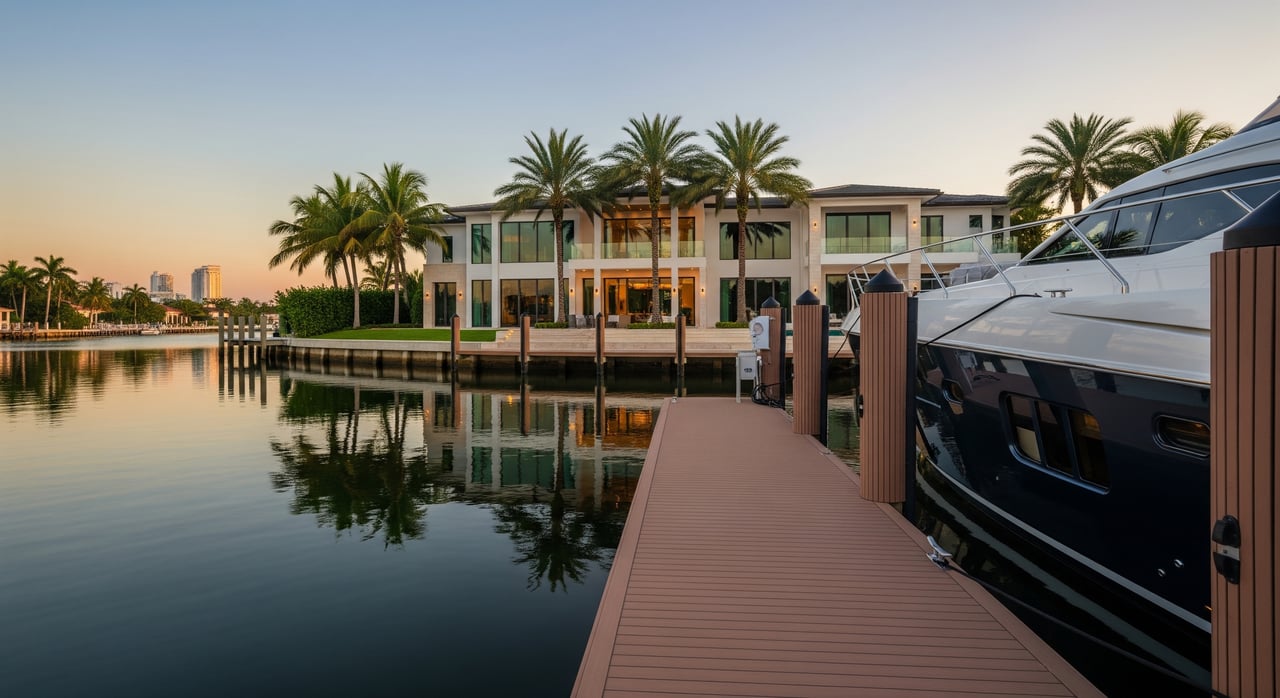
Picture yourself stepping from your patio onto your dock, coffee in hand, watching the tide change while you plan your next cruise. In Fort Lauderdale, you have choices, and each waterfront enclave delivers a different mix of access, privacy, and lifestyle. If you want the right dock for your boat, the right street for your routine, and the right rules for your plans, a little clarity goes a long way. This guide breaks down the main waterfront types, compares key neighborhoods, and gives you a practical checklist so you can move forward with confidence. Let’s dive in.
Waterfront types that shape your choice
Oceanfront and beachfront
You get direct Atlantic views and immediate beach access. Expect higher wind and erosion exposure, plus the most stringent flood and building requirements. Private deep-water docking is limited, so this setting fits buyers who value the beachfront lifestyle more than mooring a large yacht at home.
Intracoastal Waterway frontage
Homes face the protected Intracoastal Waterway with marinas and yacht clubs nearby. You can find luxury single-family homes and high-rise options. Navigation is straightforward but you will share water with vessel traffic and must follow bridge openings and channel markers.
Canal-front homes
Man-made and natural canals branch from the Intracoastal and New River. Canal layout and depth determine privacy, lot shape, and the size of dock you can use. Some canals are shallow or end at fixed bridges, so verify route, depth, and clearances if you plan to keep a larger boat on site.
Riverfront along the New River
Downtown riverfront offers walkability to Las Olas and urban amenities. You trade a quieter setting for more boat traffic, drawbridge timing, and occasional tug or commercial movement. It suits buyers who want city energy with water at their doorstep.
Inland lakes and lagoons
Calmer waters sit away from direct ocean influence, with tidal impacts that vary by pocket. You gain a quieter feel and less wake, though ocean access may be indirect or limited by bridges.
Neighborhood snapshots
Harbor Beach
Estate-scale lots and a sense of privacy are the draw, with controlled access in some areas. Many homes offer significant dockage suited to larger vessels. If you prioritize space, quiet streets, and proximity to Port Everglades for quick ocean runs, this area belongs on your short list.
Las Olas Isles
A signature boating address with luxury homes on finger canals off Las Olas Boulevard. You are close to restaurants and shopping, which adds daily convenience. Expect an active boating scene, varied lot shapes, and a mix of architectural styles from Mediterranean-inspired to modern.
Rio Vista and Rio Vista Isles
Canal-front homes sit near downtown and the river, blending historic charm with modern rebuilds. You get a shorter commute to city amenities and a neighborhood feel. Verify canal depth and bridge routes if you own a tall-mast or flybridge vessel.
Victoria Park and Tarpon River
These areas offer walkability and smaller lots in spots, with canal access in select pockets. Lifestyle buyers who want proximity to downtown often consider them. If water is a must-have, focus on segments with verified canal or river frontage.
Seven Isles and Sunrise Intracoastal
Popular with boating households, these enclaves offer a mix of canal and Intracoastal frontage. Expect a neighborhood feel with quick access to open waterways. Bridge and channel details still matter, so plan your route to the inlet in advance.
Coral Ridge
North Fort Lauderdale delivers wider lots in places and some direct Intracoastal frontage. Mature landscaping adds visual appeal. This can be a fit if you want more land while staying near beaches and services.
Match your lifestyle and your boat
The yacht owner
- Best fit: Harbor Beach, Las Olas Isles, select Seven Isles and Coral Ridge blocks.
- Why: Direct ocean access or minimal bridge constraints, deep channels, and proximity to Port Everglades for fuel and service.
- What to verify: Bridge clearances along your route, seawall condition and permitted dock length, and lift or wet-slip capacity.
The walkable lifestyle buyer
- Best fit: Las Olas Isles, Rio Vista, Victoria Park, Tarpon River.
- Why: You trade maximum dock size for easy access to restaurants, shopping, and downtown amenities.
- What to verify: Canal depth to the Intracoastal and any fixed bridges if boating is still part of your plan.
The privacy and estate seeker
- Best fit: Harbor Beach and select parts of Las Olas Isles.
- Why: Larger lots, more distance between homes, and a quieter streetscape.
- What to verify: HOA covenants, exterior design rules, and dock use standards.
Boating logistics to confirm before you write an offer
- Direct ocean access vs bridges: If you want big-boat convenience, confirm there are no low fixed bridges between your dock and the inlet. Drawbridge timing can work, but verify schedules and opening policies.
- Channel depth and tides: Depth varies by canal. Consult NOAA nautical charts and local marina or harbormaster resources for draft limits.
- Dock infrastructure: Check permitted dock length, pilings, lift capacity, and davits. Your boat’s length, beam, and weight must match what the site supports.
- Seawall condition: A failing seawall is a major expense. Request age, materials, and repair records, and hire a marine contractor for inspection.
- Traffic, wake, and noise: Intracoastal frontage offers constant scenery but also more wake. If quiet docking is a priority, weigh canal exposure and speed zones.
- Manatee and speed zones: Florida protections can restrict speed seasonally or year-round. They affect travel time to the inlet and your day-to-day boating routine.
Permits, insurance, and resilience
- Flood zone and elevation: Review FEMA flood maps and request the Elevation Certificate if available. Waterfront parcels often sit in special flood hazard zones with higher insurance requirements.
- Building codes: Florida Building Code and Broward County standards address coastal wind loading and elevation. Renovations or new builds must meet current codes, which can impact cost and timelines.
- Insurance reality: Expect to evaluate both flood insurance and windstorm coverage. Premiums vary with elevation, mitigation features like shutters or roof straps, and proximity to open water.
- Environmental and dock permits: Work in or over the water can require approvals from the City of Fort Lauderdale, Broward County, and in some cases state or federal agencies. Mangrove and manatee protections may apply.
- HOA and rental rules: Many enclaves have covenants on exterior changes, dock design, boat size, and rental terms. Short-term rental allowances vary by zoning and association, so verify before you buy.
- Sea level rise outlook: Regional planning groups and Broward County track projected sea level rise. Consider how 10 to 30-year scenarios could affect nuisance flooding, roads, and seawall standards.
Property style, upkeep, and total cost
- Home mix: Older canal neighborhoods include mid-century and ranch homes, plus modern rebuilds. Harbor Beach and Las Olas showcase high-end modern and Mediterranean-inspired estates.
- Lot shape and frontage: Narrow peninsulas increase water exposure and views. Long linear lots can maximize straight dock length.
- Maintenance cadence: Plan for seawall upkeep, dock and lift service, landscaping in coastal conditions, and hurricane-readiness systems. Annual inspections are smart.
- Big-ticket items: Seawall replacement on larger lots can be a six-figure line item. Ask for records, age, and any past variances or repairs.
Quick checklist for showings
- Verify water access type: ocean, Intracoastal with bridges, or canal with fixed bridges.
- Pull dock and seawall permits, plus any variances or environmental approvals.
- Order inspections: seawall, dock, and lift capacity. Ask for repair history.
- Request the Elevation Certificate and confirm the FEMA zone.
- Review HOA documents for boat, exterior, and rental rules.
- Map bridge clearances for your vessel’s height and beam along the intended route.
- Ask about past flood or storm claims and confirm there are no open permits or liens.
- Identify nearest marina services and emergency haul-out options.
Comparing enclaves: a quick decision guide
- Privacy and scale: Harbor Beach and parts of Las Olas Isles lean toward larger, more private estates. Canal neighborhoods often have closer-set homes.
- Walkability: Las Olas area delivers the most shops and dining nearby. Rio Vista and Victoria Park offer short commutes to downtown.
- Boating priority: If big-boat docking at home is non-negotiable, target direct ocean access and deep channels near Port Everglades.
- Noise tolerance: Intracoastal frontage brings activity and wake. Quiet canals and inland lagoons reduce traffic.
- Maintenance appetite: Oceanfront and exposed sites see more wind and salt. Protected canals can lessen wear, though seawall care remains crucial.
What about nearby coastal cities?
Pompano Beach and Deerfield Beach offer beachfront and canal neighborhoods with different bridge and marina setups. If you are flexible on location within the metro, compare bridge clearances, inlet distance, and available services across these cities to expand your options.
Your next step
Choosing between Fort Lauderdale’s waterfront enclaves is about aligning your lifestyle, boat, and long-term plan with the right street and the right rules. A focused search that verifies access, permits, and insurance early will save you time and help you negotiate with confidence. If you want curated options and off-market possibilities tailored to your goals, connect with Megan Romine for a private consultation.
FAQs
What is the difference between oceanfront and Intracoastal in Fort Lauderdale?
- Oceanfront offers direct beach access with higher wind and flood exposure, while Intracoastal frontage provides protected waters, marinas, and private docks with bridge and traffic considerations.
How do bridge clearances affect my boat choice and route?
- Low fixed bridges can limit mast or flybridge height, so confirm vertical clearances and drawbridge schedules along your route before choosing a home or a vessel.
Do I need flood insurance for a waterfront home in Broward County?
- If the property lies in a FEMA special flood hazard zone, lenders typically require flood insurance, and premiums depend on elevation and mitigation features.
What should I ask about a seawall before I buy?
- Request age, material, and repair records, then order a professional seawall and dock inspection to estimate remaining life and potential replacement costs.
Are there rules on short-term rentals in Fort Lauderdale waterfront neighborhoods?
- Yes, rules vary by zoning and by HOA or condominium association, so review municipal ordinances and community documents before making plans.
Why does proximity to Port Everglades matter for yacht owners?
- Being close to the inlet shortens your run to the ocean and places you near fuel, haul-out, and maintenance services that larger vessels may need regularly.