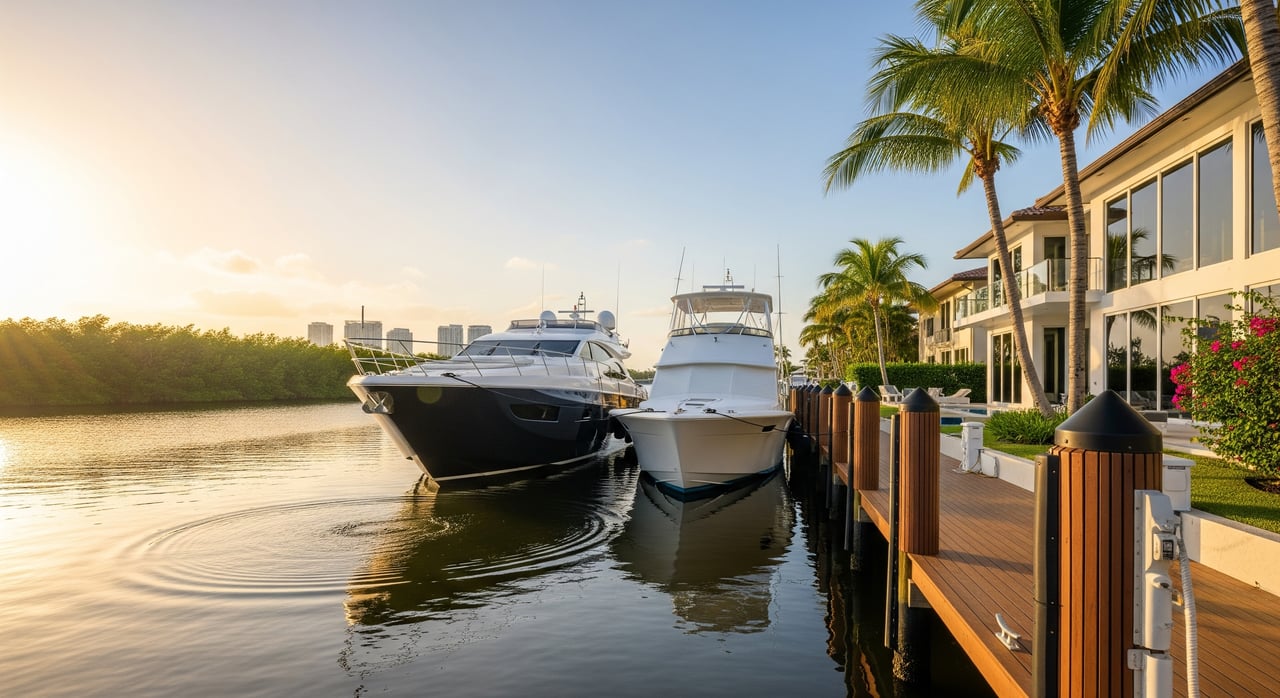
You have a boat and a big decision: Lighthouse Point or Pompano Beach. You want the right mix of ocean access, secure docking, and day-to-day convenience. The stakes are high, because the right waterfront fit can change how you live and what you spend. This guide compares both areas through a boater’s lens, so you can move forward with clarity and confidence. Let’s dive in.
Quick take: how they differ
- Lighthouse Point: Quiet, residential canals with many private docks tied to single-family homes. Best if you want a low-key boating lifestyle with your vessel at your doorstep.
- Pompano Beach: Larger waterfront economy with public marinas, yacht clubs, fuel, pump-out, and repair nearby. Better if you need full-service facilities or plan frequent transient stays.
- Access: Both connect directly to the Intracoastal Waterway and offer relatively quick runs to the Atlantic. Exact travel time depends on your specific dock, bridge clearances, and water depth.
- Vessel size: Lighthouse Point canals are often ideal for small to medium yachts. Pompano offers deeper maintained channels in some areas and more options for larger boats.
ICW and ocean access
Both municipalities sit on the Intracoastal Waterway, so you can reach the Atlantic in a short run. Your actual time to open water depends on your exact location, fixed-bridge clearances on your route, and local depths at mean low water.
For larger vessels, confirm draft needs, turning basins, and any dredging history. Navigation conditions change over time, so use current nautical charts and speak with local harbormasters or marina teams before you buy.
Marinas and on-shore services
Lighthouse Point
Lighthouse Point is dominated by private residential docks. Most owners fuel up, pump out, or haul out at nearby commercial marinas outside city limits. If you want your boat steps from your kitchen and prefer a calm, neighborhood feel, this setup works well.
Pompano Beach
Pompano offers more public and commercial marina options with transient slips, shore power, fuel, pump-out, and repair. The broader Fort Lauderdale corridor nearby adds extensive yards, mechanics, electronics pros, and chandlers. If you prioritize full-service support, Pompano will likely feel more convenient.
What to look for at a waterfront property
Small differences at the dock can have big impacts on value and daily use. Verify the details before you write an offer.
- Dock ownership and permits: deeded private dock, community dock, or lease. Ask for permit records and drawings.
- Water depth at mean low water: confirm actual readings, not estimates. Ask about dredging history and responsibilities.
- Fixed-bridge clearances: check your route to the inlet and the ICW. Clearance controls mast height and some flybridge profiles.
- Seawall condition: materials, permitted height, and remaining life. Replacement is costly and requires permits.
- Dock type and utilities: fixed vs floating, shore power specs, water, lighting, and internet. Pump-out access if you plan to live aboard.
- Vessel size constraints: canal width, turning radius, and any local rules that limit length or beam.
Rules, safety, and insurance
You will encounter a mix of city, county, state, and federal rules on the water and at the dock. Confirm them early to avoid surprises.
- Permits: Dock construction, repairs, and seawalls need approvals. Depending on scope, you may deal with city, county, state, and the U.S. Army Corps of Engineers.
- Speed zones and anchoring: Both cities enforce no-wake and other safety rules. Review local ordinances and ask the harbormaster for current guidance.
- Flood and wind coverage: Waterfront homes carry elevated flood and hurricane risk. Lenders often require flood insurance in mapped zones, and separate wind and boat policies are common.
- Hurricane planning: Marinas often have formal storm plans, including haul-out queues. Private dock owners should line up safe harbor, lines, fenders, and storage options well before hurricane season.
- Environmental rules: Discharge is restricted in many areas. Use pump-out facilities and keep documentation if required by your marina or HOA.
Who thrives in Lighthouse Point
Choose Lighthouse Point if you want:
- A residential setting with a private dock on a canal.
- Small to medium yachts where canal depth and turning room meet your needs.
- A quiet home base and you do not mind heading to nearby cities for fuel, haul-out, or major service.
Who thrives in Pompano Beach
Choose Pompano Beach if you want:
- Full-service marinas, transient slips, and easy access to fuel and repairs.
- Options for larger vessels or more complex systems that need frequent professional support.
- A more active waterfront scene with a mix of residential and commercial facilities.
Cost and value considerations
Waterfront premiums vary by exact location and water access. Direct ocean access and routes without restrictive fixed bridges often command higher prices. A property that suits your boat’s length, beam, and draft can be worth more to you than a similar home that cannot accommodate your vessel. Factor dock work, seawall upgrades, and ongoing maintenance into your budget.
Decision checklist for boaters
Use this short list while touring homes and marinas.
- Confirm dock ownership, permitted dimensions, and transferability. Obtain copies of permits.
- Measure water depth at mean low water and during seasonal lows. Ask about dredging and who pays.
- Map your route to the inlet. Confirm fixed-bridge clearances for your vessel.
- Verify proximity and capacity of marinas for fuel, pump-out, haul-out, and repair.
- Ask for flood zone info and any available elevation certificate.
- Inspect seawall condition and request quotes for repairs if needed.
- Review HOA and city rules on boat size, storage, and liveaboard policies.
- Confirm shore power, water, lighting, and communications at the dock.
- Speak with local harbormasters, marina managers, and a marine surveyor familiar with the area.
Real-world scenarios
- You own a 32-foot center console and want quiet canal living. Lighthouse Point likely fits, provided your canal depth and bridge clearances match your boat.
- You run a 60-foot motor yacht and plan regular yard work and electronics upgrades. Pompano’s marina network and nearby service yards offer more convenience.
- You plan to charter occasionally or host transient guests. Pompano’s transient slips and services may simplify operations.
Your next step
If you are torn between the serenity of Lighthouse Point and the service-rich ease of Pompano, focus on your vessel’s specs and your boating routine. Match the property to the boat, not the other way around. Then confirm the numbers, permits, and risk profile so you buy with confidence.
Ready to compare on-the-water options, including off-market opportunities tailored to your boat? Connect with Megan Romine for a private consult and a curated waterfront short list.
FAQs
Can I keep a 50-foot boat at a private dock in Lighthouse Point?
- Possibly, but it depends on canal width, depth at mean low water, turning room, and local permits, so verify on a property-by-property basis.
Is Pompano Beach better for haul-out and major repairs?
- Yes, Pompano and the nearby Fort Lauderdale corridor offer more commercial yards, fuel docks, pump-out, and specialized marine services.
Will insurance be higher for a waterfront home in Broward County?
- Typically yes, since flood and wind risks add cost, and exact premiums depend on flood zone, elevation, construction, and mitigation features.
Do condos in these areas include boat slips?
- Some do and some do not, so confirm whether slips are deeded or leased, any size limits, fees, and how transfers work before you buy.
How do hurricane plans differ between private docks and marinas?
- Marinas often have formal hurricane plans and haul-out queues, while private dock owners must set up their own storm plan, storage, and equipment.