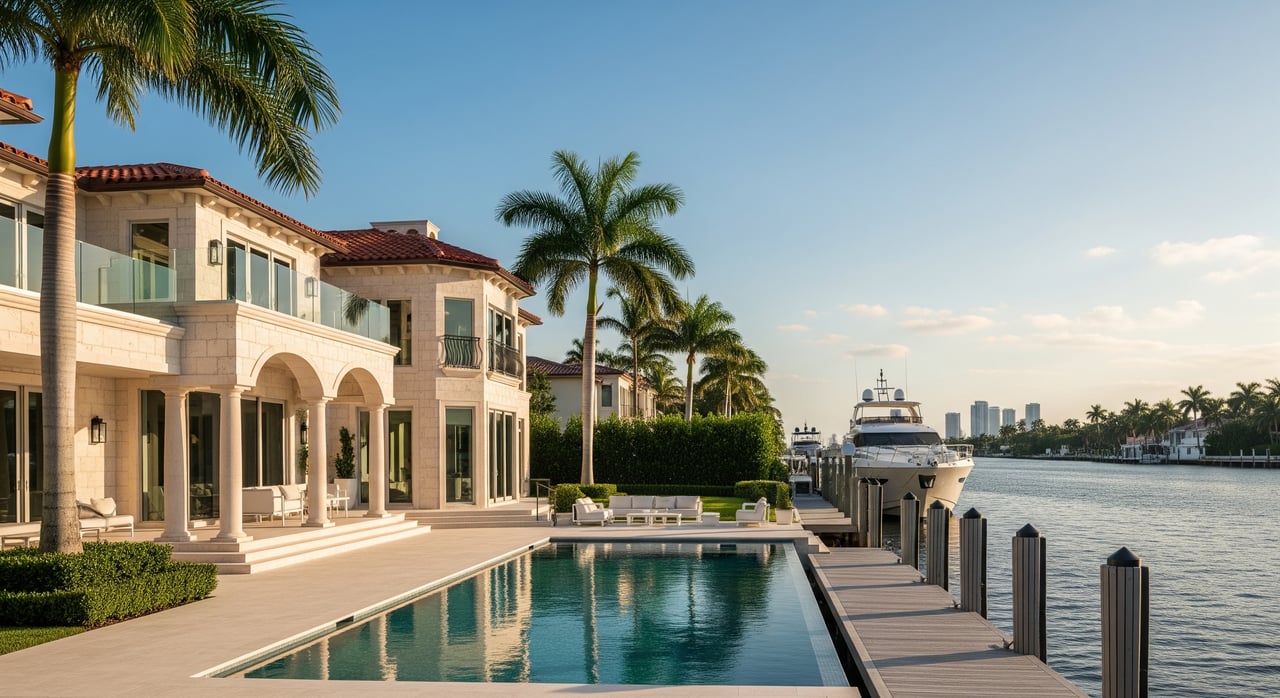
If you are scrolling Boca Raton listings and seeing words like deepwater, no fixed bridges, or draft, you are not alone. Waterfront language can feel like a different dialect, and the details matter when you plan to keep a boat at home. In this guide, you will learn what the most common terms mean, what to verify before you bid, and where to look up depths, bridge clearances, permits, and flood zones for Boca Raton and Palm Beach County. Let’s dive in.
Boca waterfront basics
Boca Raton sits on the Intracoastal Waterway with a web of canals and quick routes to the Atlantic. Many listings highlight ICW or ocean access. That is a good start, but you should confirm the exact route and bridge implications for your vessel using official sources like NOAA nautical charts and NOAA Tides and Currents.
Tides in South Florida are modest, but inches matter for draft and bridge clearance. Seasonal weather, king tides, and sediment can change usable depth at a dock. Always confirm depth at the lowest expected tide and ask about dredging history or shoaling.
Many Boca lots have seawalls or bulkheads. Owners usually maintain these structures, and repairs can be significant. If you expect to modify a dock or lift, know that permits typically involve the City or County, the Florida Department of Environmental Protection, and sometimes the U.S. Army Corps of Engineers. Check local records and coastal rules before you assume any upgrades are simple.
Quick glossary for Boca listings
Deepwater
Often used as marketing. It suggests there is enough depth for larger boats without frequent dredging. There is no universal depth for this term.
- What to verify: Ask for measured depth at the dock at mean low water and at seasonal lows. Request recent soundings or channel charts.
No fixed bridges
Means there are no non-lift bridges between the property and the ocean that would block your boat’s height.
- What to verify: List each bridge on your route, then confirm published vertical clearances on NOAA nautical charts. Clearances are often measured at mean high water.
Beam
The maximum width of your boat. It dictates whether you fit within a slip or alongside piles.
- What to verify: Compare boat beam to slip width and pile spacing. Add a practical margin for fenders and maneuvering.
Draft
The depth of water your boat needs from the surface to the lowest point of the hull.
- What to verify: Compare your draft to depth at mean low water at the dock, plus a safety clearance. Check NOAA tide predictions for seasonal lows.
LOA (Length Overall)
The full length from bow to stern. Many docks and lifts are rated by LOA.
- What to verify: Ensure the dock and lift can handle your LOA plus overhang and swing clearance.
Air draft
Height from the waterline to the highest fixed point on the boat. Critical for bridge planning.
- What to verify: Match air draft to bridge clearances at mean high water. Antennas and radar masts count.
Slip, slip width, slip length
A designated berth at a dock or marina. Dimensions often show length by width.
- What to verify: Confirm actual usable dimensions, pile layout, and turning room. Ask for as-built drawings.
Private dock vs. community dock vs. marina slip
Private docks sit on the home’s lot. Community docks are shared and often managed by an HOA. Marina slips are part of a managed facility and may be leased.
- What to verify: Ownership, maintenance responsibility, transfer rules, and any HOA or lease restrictions on boat size or lifts.
Boat lift, davit, piling
Equipment that secures or hoists a boat. Capacity and permits matter.
- What to verify: Lift capacity, age, electrical permits, and service history. Confirm pilings are sound and permitted.
Seawall or bulkhead
A retaining wall that protects the land and defines the waterfront edge.
- What to verify: Construction date, materials, repair history, permits, and who maintains it. Ask for recent inspections or engineering reports.
Riprap
Layered rock for shoreline protection. It can be an alternative to a vertical seawall.
- What to verify: Permit records and condition. Confirm it does not intrude on navigable water.
Mean High Water and Mean Low Water
Tidal datums used to define average high and low tide levels. They affect legal boundaries and depth measurements.
- What to verify: Ask whether depth and clearance figures are given at MHW or MLW. Request elevation certificates if relevant.
Littoral and riparian rights
Waterfront ownership rights related to access and use. The specifics depend on local law and recorded documents.
- What to verify: Obtain a title opinion and survey to confirm docking rights, access, and any restrictions.
Mooring field and transient moorage
Designated buoy fields or short-term slips. They may limit long-term storage.
- What to verify: Time limits and permitted vessel types. Ask about waitlists.
Dredging and maintained channel
Sediment removal to maintain depth. Maintained channels are dredged on a schedule by agencies or local authorities.
- What to verify: Maintenance responsibility, frequency, and upcoming projects through U.S. Army Corps of Engineers resources.
Fixed bridge, drawbridge, bascule, swing
Fixed bridges do not open. Movable bridges open on a schedule to allow taller vessels.
- What to verify: Bridge types on your route, opening times, and clearances. Plan your timing during busy periods.
No wake zone
Areas where boats must operate at idle speed to reduce wakes.
- What to verify: Local rules and zone boundaries via the Florida Fish and Wildlife Conservation Commission.
What to verify before you shortlist
Request these items early. They save time and help you compare properties:
- Recent boundary and location survey showing mean water lines, docks, and any encroachments.
- FEMA Elevation Certificate or site plan that compares first-floor elevation to Base Flood Elevation.
- Seawall and dock documentation including permits, construction date, repair records, and any assessments.
- Dock and lift permits with as-built drawings and lift specifications.
- Depth soundings at the dock at mean low water and any relevant channel soundings.
- Title report and recorded easements confirming littoral or riparian rights and docking rights.
- HOA covenants or marina lease rules if not a private dock.
- Insurance loss history including flood, wind, and seawall claims.
Plan your route and clearances
Use official tools to confirm your boat’s path from dock to the ocean.
Map the route. Review ICW and canal paths with NOAA nautical charts. Identify each bridge along the way.
Confirm vertical clearances. Bridge clearances on charts are often listed at mean high water. Match your air draft to the listed clearance and add a safety margin.
Check tides and seasonal lows. Use NOAA tide predictions to estimate depth changes and plan departures.
Ask about dredging. If your path relies on a maintained channel, confirm status and projects through the U.S. Army Corps of Engineers and local marina intel.
Seawalls, docks, and permits
Coastal rules protect shorelines and navigation. Work on docks, lifts, riprap, and seawalls typically requires permits. Expect to coordinate with the City of Boca Raton or Palm Beach County, the Florida DEP, and sometimes the U.S. Army Corps of Engineers.
- Local records: Start with the City of Boca Raton Building Division and the Palm Beach County Building Division for permit history and required local standards.
- State rules: Review shoreline and Coastal Construction Control Line guidance from the Florida Department of Environmental Protection.
- Regional water: Certain projects may involve the South Florida Water Management District permitting portal.
If you plan upgrades, verify HOA rules, lift types allowed, and visibility standards. For older docks, assume electrical and structural components might need updates to meet current code.
Insurance and flood zones
Boca Raton is in a hurricane-exposed coastal region. Flood zones and Base Flood Elevation drive lender requirements and premiums. Coastal V zones often carry stricter standards than A zones. Request the Elevation Certificate early and compare it to the Base Flood Elevation.
Look up your property on the FEMA Flood Map Service Center. Use this to discuss coverage and expected costs with a coastal insurance specialist before you finalize terms.
Smart negotiation points
Use the technical details to protect your goals and price:
- Tie claims to documents. If a listing states deepwater or 80-foot boat ready, request depth soundings at mean low water and lift specs showing capacity and LOA.
- Address seawall risk. If age or condition is unclear, request an inspection by a coastal engineer. Seek credits or repairs if there is deferred maintenance.
- Confirm bridge fit. For boats with significant air draft, get the list of bridges and their clearances. If a drawbridge schedule affects usage, factor that into value.
- Verify rights. Ensure docking rights and any easements are clear in title. If access or transfers are limited, adjust terms.
- Budget for permitting. If you need a new lift, piles, or dock expansion, outline the permit path and timeline in advance.
Work with a concierge advocate
Buying Boca Raton waterfront is both lifestyle and logistics. Precise measurements, verified documents, and local permits are what make the difference between a smooth closing and surprises after move-in. If you want a team that pairs white-glove service with deep coastal know-how, we are here to help you confirm the details, plan your route, and secure the right home for your vessel and lifestyle.
Ready to explore private listings, verify your boat fit, and move with confidence? Connect with Megan Romine to Explore Off-Market Opportunities or Schedule a Private Consultation.
FAQs
What does “deepwater” mean in Boca Raton?
- It is marketing shorthand suggesting adequate depth for larger boats. Always request measured depth at mean low water, recent soundings, and the dredging history for the dock and access channel.
How do I check bridge clearances on my route?
- Identify each bridge, then confirm published vertical clearances on NOAA nautical charts. Match those to your boat’s air draft and add a safety margin, especially at mean high water.
Who maintains my seawall or dock at a Boca home?
- It is often the homeowner, but sometimes an HOA or a municipality manages certain segments. Ask for permits, repair records, and recent inspections from the City of Boca Raton Building Division or the Palm Beach County Building Division.
Where can I verify flood zones for a Boca property?
- Use the FEMA Flood Map Service Center to look up flood zones, then compare the property’s Elevation Certificate to Base Flood Elevation for insurance planning.
Do I need permits to add a lift or modify a dock?
- Yes, most shoreline work needs local and state permits and sometimes federal review. Start with the City or County, the Florida DEP’s CCCL resources, and the U.S. Army Corps of Engineers.